Hans deBot grew up in Winston-Salem and has been a North Carolina boy his whole life. His father was born and raised in Holland, and all of his family on his father’s side lives in Holland. No matter where he lives, he says he has always tried to give back to the community.
As a young athlete, he was a big soccer player in Winston-Salem. His father, Bob Beck, and Quentin Chaffee worked with support from the town to build the foundation of the Twin City Youth Soccer Association. Hans was on the first-ever select team representing Winston-Salem. From early on, he says he has always wanted to develop and grow the places he has lived.
Today, that place is Mooresville.
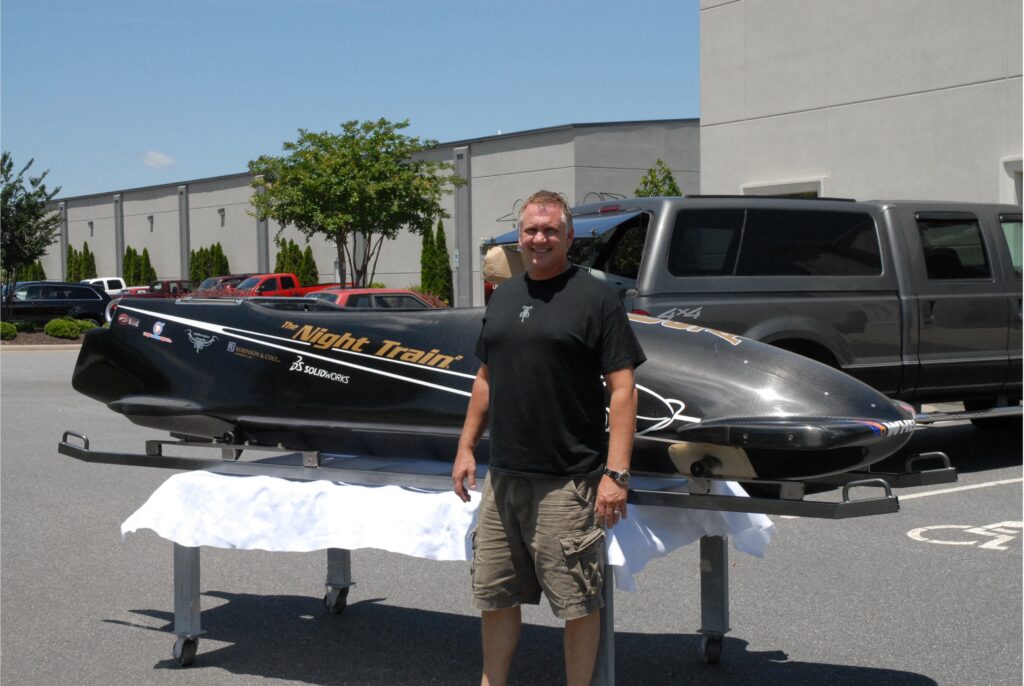
Mooresville is where his shop is. It’s where he employs people. It’s also the town he really loves.
deBotech is an advanced technology composite manufacturer, building composite parts for different industries worldwide.
At the core of the company’s work is carbon fiber. It’s very similar to fiberglass. Most people have heard of fiberglass since most boats are made out of the material. Instead of a glass fiber, it’s a carbon fiber. Carbon fiber is made from carbonizing a synthetic polymer fiber. These fibers are heated in a furnace to 3000 degrees Fahrenheit, which changes the molecular structure to mostly pure carbon. Hence the name carbon fiber.
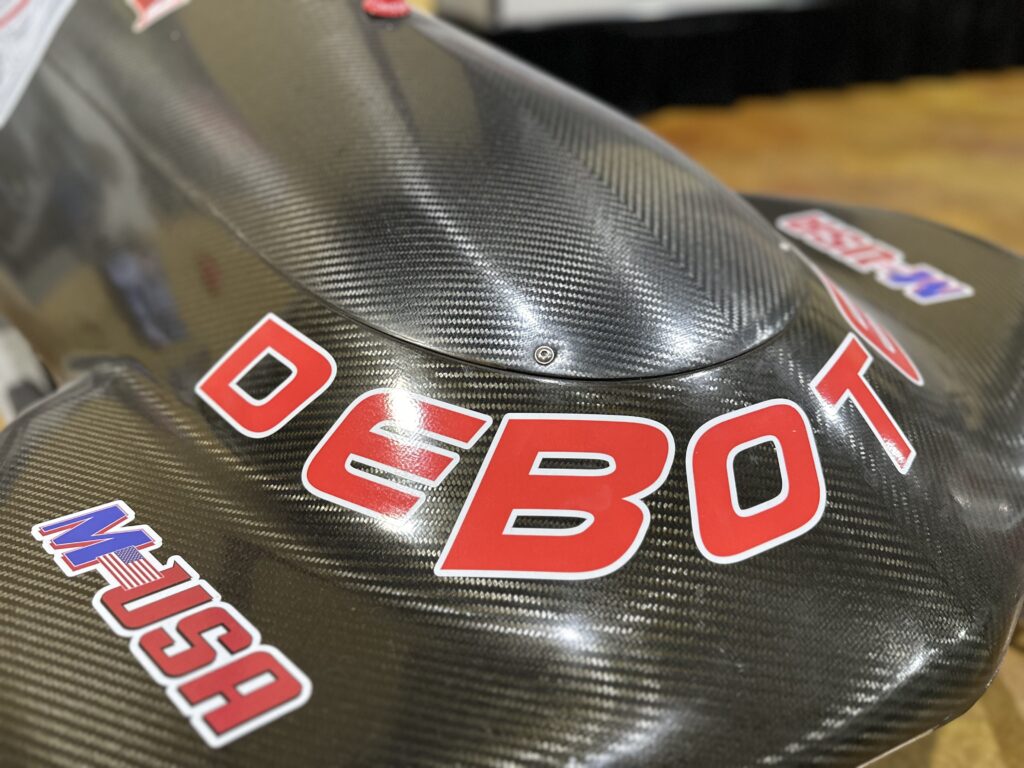
Hans’ path into carbon composites began in Charlotte, where he was working in the marine industry manufacturing aluminum sailboat spars. They used aluminum extrusions to do OEM-level sailboat spars for a manufacturer in the city.
The company wanted to start a carbon division and hired someone who supposedly knew what he was doing. That person was in way over his head and ended up flying the nest, leaving the company with the idea and investment into carbon.
Hans was about 25 years old when his mentor encouraged him to figure it out. So he did. They went on to build the only continuous fiber one-piece hollow sailboat spar in the world. He did that work for about six years.
During that time, he had many friends working in NASCAR motorsports teams. One close friend asked if they would be interested in teaching teams how to make parts. Hans told him, “It’s not an easy business. You don’t know what you’re asking, right?” But he showed them how it was done.
That sparked another idea. They had residual leftover materials from manufacturing sailboat spars. He thought maybe they could develop those into race car parts. He presented the idea to the company. One of the owner’s sons, who was the GM, thought it was a great idea. The plan was for Hans to head up a carbon fiber division within the company focused on race car parts.
Two weeks later, the owners separated. Everyone who thought it was a good idea left the company, and the plan did not pan out.
Hans still believed in the project.
His neighbor and good friend, Rex Stump, a chassis engineer for one of the big race teams, also believed he had something special. Rex said that if Hans developed applicable products, he could introduce him to crew chiefs.
The first one Hans met was Ray Evernham. Ray said, “Man, that’s the best work I’ve ever seen. Get him started right away.”
For more than a year, Hans worked his day job during the day. Then he would go home, grab a bite to eat, and head into the garage, working until 2, 3, or 4 o’clock in the morning building parts for NASCAR. Then he would turn around and go back to his day job. He was burning the candle at both ends.
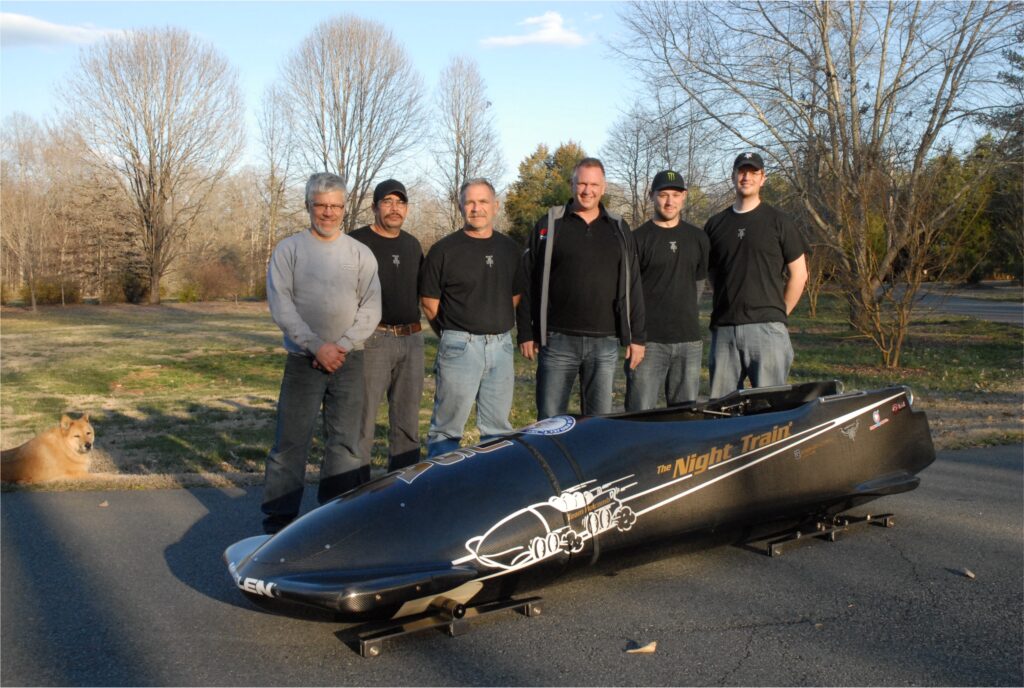
Eventually, demand became too much to balance. He went to his company and told them he wanted to make a go of it. They believed in him. They let him go.
For a time, he earned unemployment while working full-time in his garage. Back then, that was $333 a week. He told his wife, Jamye, “I’m gonna make a go of it, if you’re supportive of it.” They were going to make it work one way or another.
Then it started dominoing.
Around that time, Greg Fornelli moved to the area from Kansas City and ended up living across the street from Hans’ father. Greg had started his business three years earlier within the NASCAR community supplying steel and aluminum materials. He invited Hans to set up shop in his building near the drag strip. Hans built up all the offices himself and began building parts there. Greg helped distribute those parts to customers throughout NASCAR.
Eventually, Hans moved out of that bay, rented a shop, and later built his own. That shop is now in Mooresville.
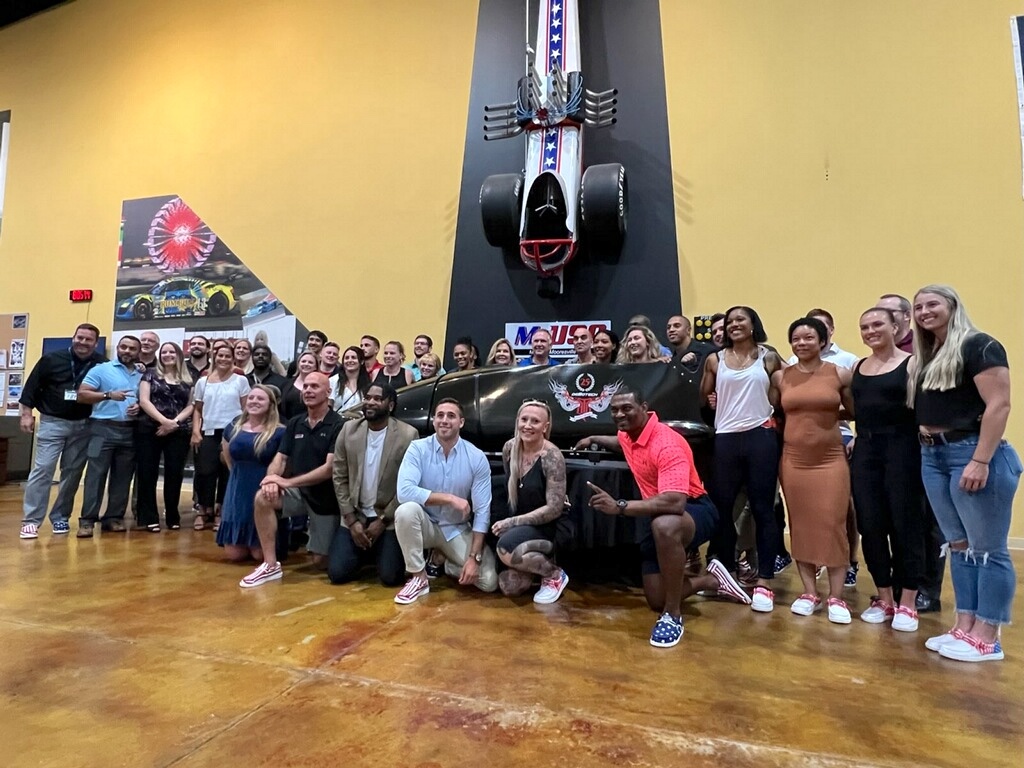
Then came a call that would change everything.
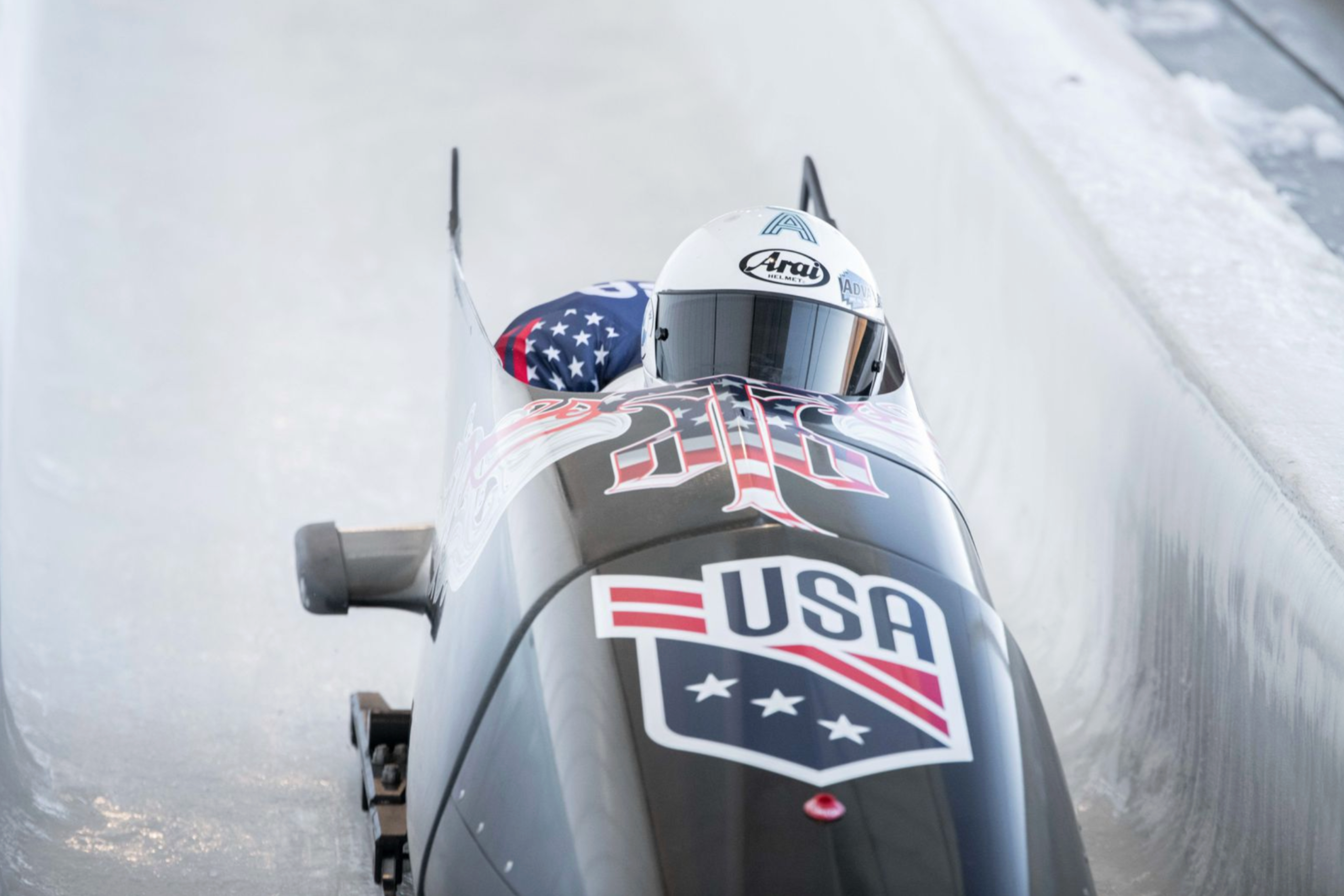
Bruce Rosselli, a USA Bobsled driver, called in November 2001. He said he got Hans’ name from someone who said he did great work and was willing to help people. Rosselli asked him to build a Bobsled for the 2002 Winter Olympics in Salt Lake City.
Hans didn’t know anything about Bobsled. But he took it on.
He researched the specifications online and got to work. The sled ended up being a forerunner in the 2002 Games. That brought attention, and he began helping Geoff Bodine and Bob Cuneo leading up to 2010.
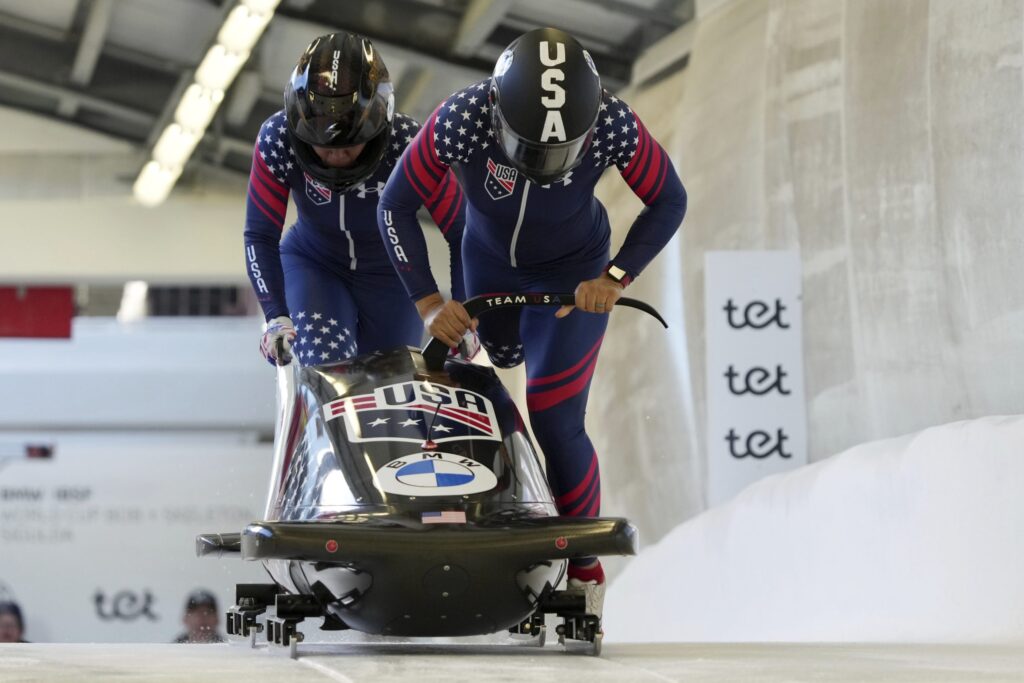
In 2010, the United States won the gold medal in four-man, the first in nearly 40 years. Hans notes that while 2010 was amazingly exciting, he had only done componentry on that sled and was still a rookie when they went to Vancouver.
Because of the attention from the Bobsled program, the Skeleton team approached him. He built his first Skeleton sled for director Steve Peters and athlete Katie Uhlaender. They brought Katie to the shop and developed everything specifically for her. The first year out of the box, she won the world championship.
In 2014, deBotech built an entirely new fleet. They won medals in women’s, men’s, two-man, four-man, women’s Skeleton and men’s Skeleton.
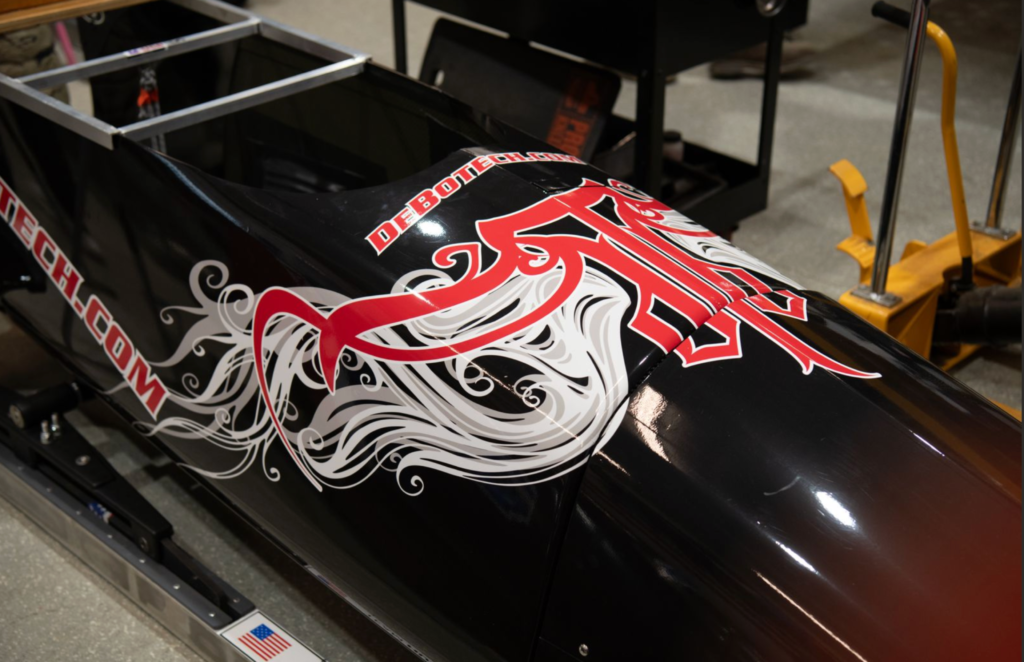
And most recently, at the 2026 Winter Olympics, he saw Kaillie Humphries medal, Elana Meyers Taylor win her first gold, and Frank finish fourth, so close.
They have been fighting to get back to that level since then, especially after losing Steve Holcomb. Holcomb was a great leader and a super, great man who was a big part of how the team reached those heights. When he died, it took a lot of steam out of the program for athlete development.
Hans is candid about the realities athletes face.
Olympic athletes are awesome, he says. But the way the program is run is another story. The athletes work hard at their craft, raise money and sponsorship, but they can’t pull it all together. They don’t get help from the government like most other countries do.
He grew up seeing how NASCAR teams are run and how drivers and sponsors treat each other like family. In NASCAR, the NBA, and the NCAA with NIL money, there is money for athletes. In Bobsled, the only real motivation is the desire to win an Olympic medal, which makes the pool much smaller.
These athletes and coaches give 35 or 40 years of their lives to the sport. When they retire, they have nothing. No pension. No 401k.
That doesn’t happen in Germany, where athletes are paid well and everyone in the operation is devoted to being a team. Germany recently took home medals in all the Bobsled events.
Hans says he definitely gets his money’s worth out of supporting these athletes. They are giving it their all, and they know exactly what deBotech does for them.
But he is clear that there is room for change. The board in charge, he says, has no idea the time and work that goes into making one of these sleds. They think it just magically happens. There needs to be some direction change. Now is the time to re-evaluate how things are run at the administrative level so Bobsled athletes can put their best out on the ice.
Hans has even experienced the sled firsthand. He rode in a four-man with Nick Cunningham driving, along with a real brakeman and friends. He described it as phenomenal. An adrenaline junkie, he would do it again in a minute. He once hoped to ride again in a two-man with Kaillie, but the coach advised against it to avoid risking a back injury. The track ended up closing early that day anyway.
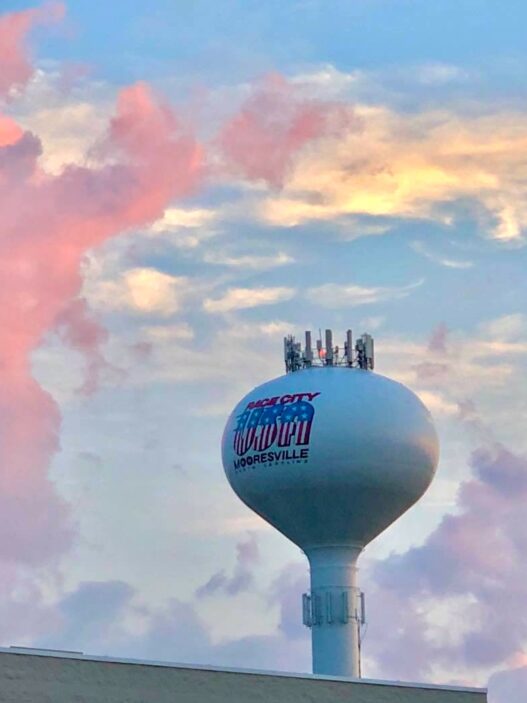
In 2015, Hans was inducted into the Mechanical and Aerospace Engineering Hall of Fame at NC State University and was given the Businessman of the Year award from Mooresville. He has worked closely with the town to bring business here and promote Mooresville. deBotech sponsors the Bands, Brews & BBQ festival to give back and put on an exciting event. During the 2014 Olympics, there were national shout-outs for the town of Mooresville.
It is a great reward, he says, to have his shop in the town that he really loves.
Looking ahead, he remains confident. Based on their successes and the fact that they are building the fastest Bobsleds in the world, he believes they can keep winning. There is no reason they shouldn’t be dominating. They physically can be.
Is this a passion? Of course. Does he want to help athletes win gold medals? Absolutely.
And for the next generation, especially young people here in our community, his message is simple.
Whatever your dreams are, chase them. Don’t give up. You will hit roadblocks. You will run into challenges. It’s how you face them that matters. Being told no is just an opportunity to find another way. Believe in yourself and continue chasing your dream. There is always another way.
And through it all, he makes one thing clear.
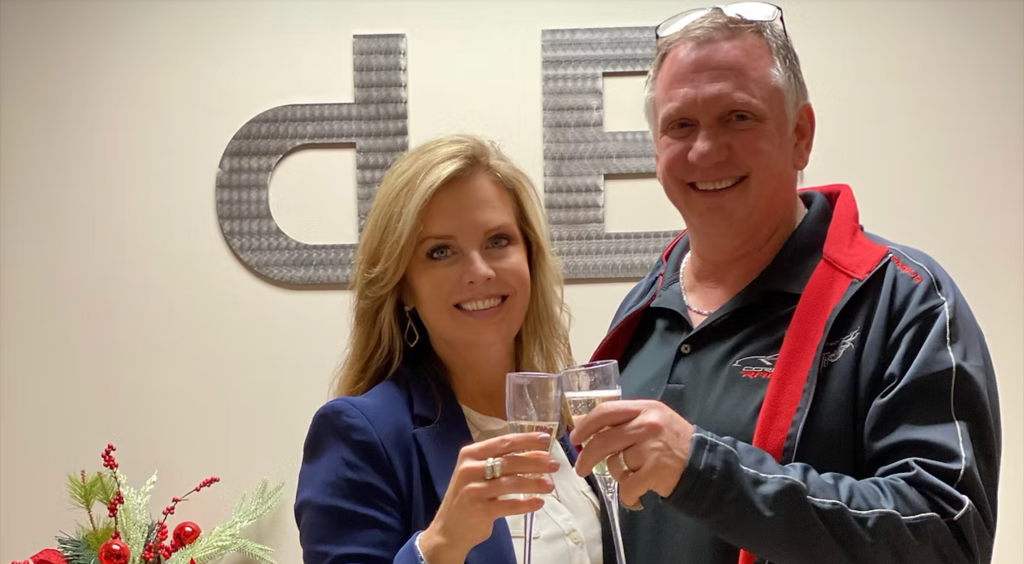
His wife, Jamye, the CFO and VP of deBotech, is as much a part of this as he is. He couldn’t have done any of it, or still be doing it, without her.