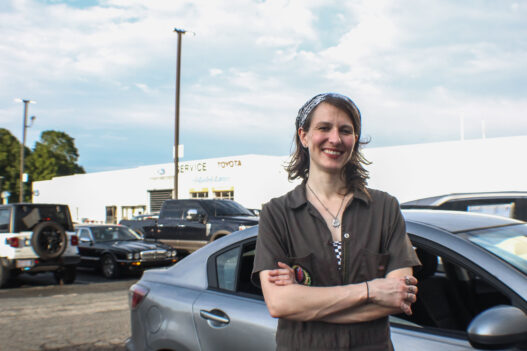
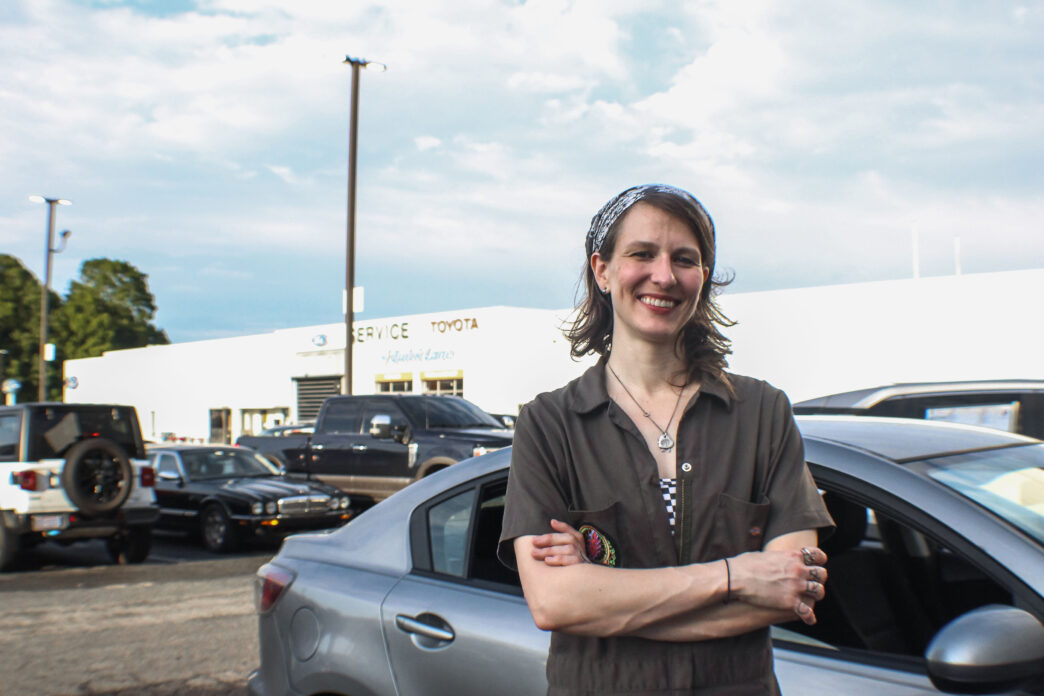
For Meg Dietrich, understanding cars has never just been about knowing how to turn a wrench. It is about confidence, independence and knowing enough to ask the right questions. As the founder of Women’s Car Care 101, Dietrich is taking years of experience as a mechanic, mechanical engineer and member of the racing industry and using it to teach women something she believes everyone who drives should have: a basic understanding of their own vehicle.
And now, she is bringing that mission directly to women here in Mooresville.
“I want every woman to leave feeling more confident and capable with her car, and honestly, not just with her car,” Dietrich said. “When you build your knowledge and skills in one area of your life, and you have the words to say and the skills to back them up, that confidence doesn’t stay in cars. It carries over into every other area of your life.”
A Curiosity That Started Early
Ask Dietrich where she is from and there is more than one answer. “I consider Omaha, Nebraska and Boone and Mooresville, North Carolina all home,” she said. “I’m an Air Force brat, so I grew up moving around a lot, and home has always been more of a feeling than a place for me. It’s the people and the community I find rather than the place itself.”
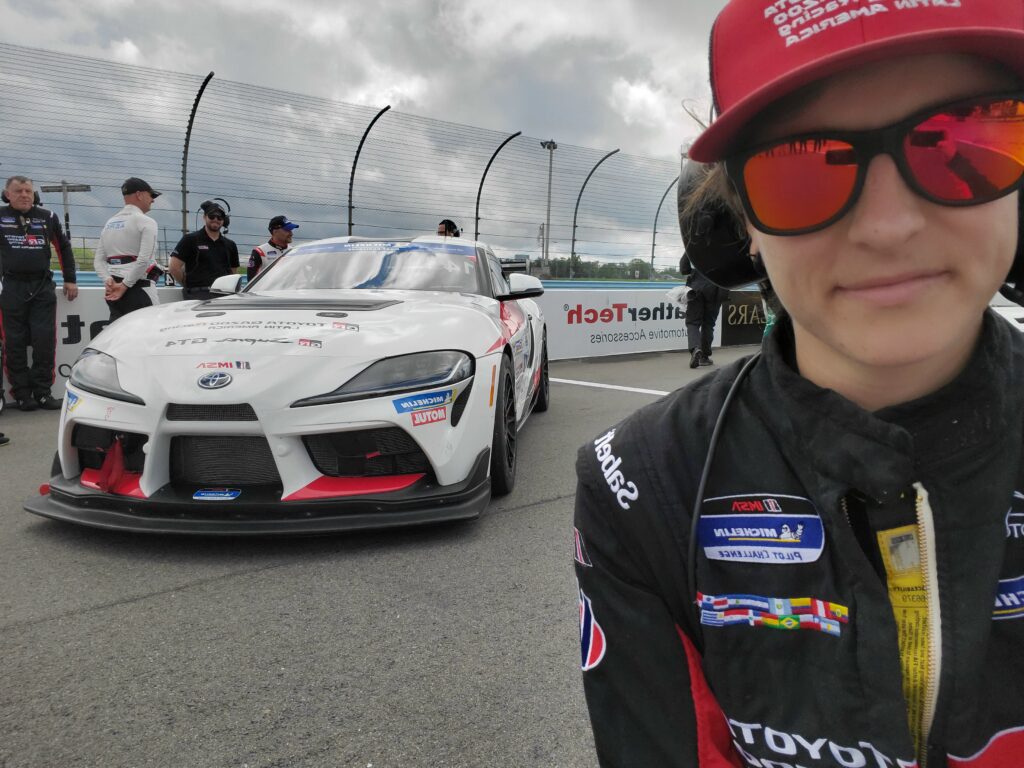
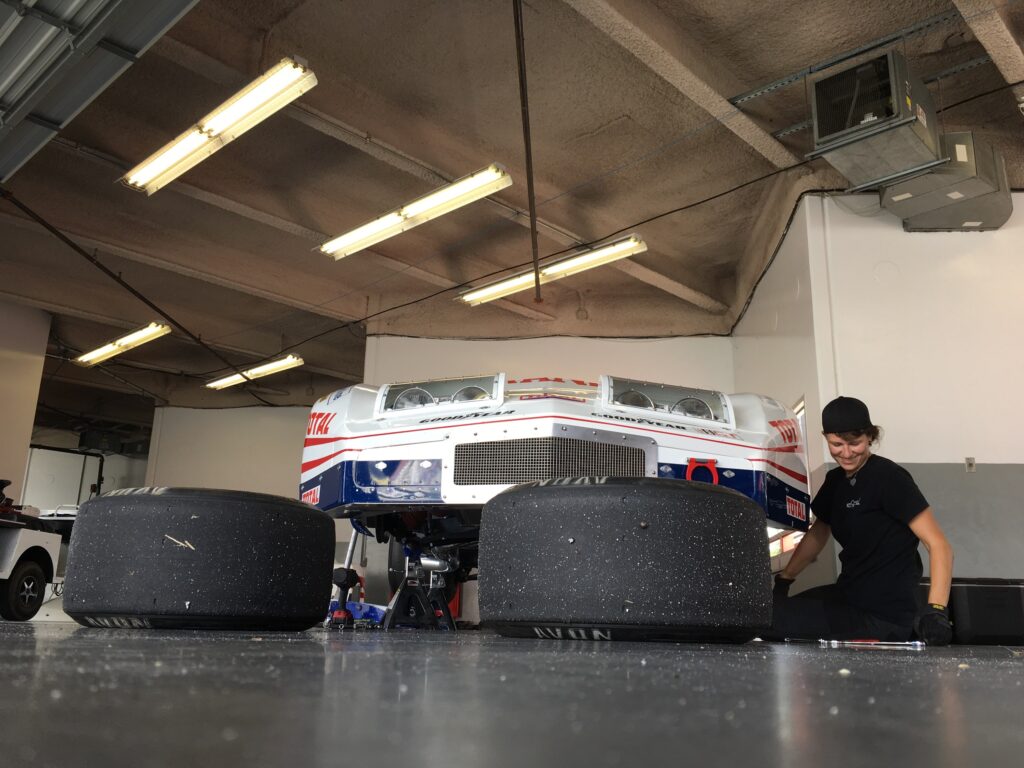
Dietrich ended up in North Carolina about 15 years ago after traveling coast to coast. She fell in love with the Blue Ridge Mountains and moved to Boone for a few years before coming down the mountain to Charlotte to study mechanical engineering at UNC Charlotte, which also offered a motorsports program. After graduating, she spent about five years in racing, which ultimately landed her in Mooresville.
There were no other mechanics in Dietrich’s family. She was the first, but her fascination with cars goes back as far as she can remember. She vividly recalls being in third or fourth grade when she spotted a bright yellow convertible and asked her dad what it was. She learned it was a Mustang GT, and it became the car she always said she wanted when she was little.
“I just always wanted to know how things worked,” she said.
By high school, that curiosity was becoming a career path. “I’d figured that if I was going to be driving cars for the rest of my life, I might as well know how to work on them, and I knew I wanted to work with my hands,” Dietrich said.
A program through a local community college in Nebraska allowed her to leave high school early to take automotive technology classes and prepare for a job at a dealership. She became an apprentice at a Chevy dealership under a mentor she credits with helping her develop as a mechanic.
“Being a mechanic is one of those professions where you get better so much faster when you have an expert you can go to with questions, and what I learned in those months was invaluable,” she said.
Dietrich spent about five years at the dealership before leaving Nebraska. Later, while working at a small mom-and-pop shop in the mountains, she found herself rebuilding engines and pulling transmissions and began thinking about her next challenge. “I realized I’d love to be able to design the cars I’d been working on, and that’s when I decided to go to school for engineering,” she said.
Her years of hands-on experience proved to be an advantage when she entered engineering school, particularly when she became involved with the Kulwicki Motorsports Lab at UNC Charlotte.
Dietrich has fond memories of every stage of her career. The dealership provided the learning environment that gave her the confidence to call herself a mechanic. The small Boone shop consisted of three employees plus the owner. They bought lunch for everyone each day, took turns choosing where to eat on Fridays and became a close-knit group.
But some of her favorite memories happened outside of work, when she would go car shopping with girlfriends in her early twenties.
“Nine times out of ten a salesperson sees two young women walk onto the lot and thinks easy target,” she said. “I loved flipping the script, asking pointed, direct questions, popping the hood, checking the oil. The look on their face was always priceless.”
Dietrich realized there was power in knowing what to ask and understanding what she was looking at. She also discovered that she enjoyed teaching her friends how to care for their cars, prevent breakdowns and handle emergencies more than simply doing the work for them.
The Woman With the Flat Tire
One encounter at the small repair shop in Boone stayed with Dietrich for years. A woman came in with a flat tire that had clearly ruined more than just her day. The shop was open air, so the woman watched Dietrich pull her car around and begin fixing the tire.
The two started talking, and Dietrich showed her what she was doing and explained why. She eventually coached the woman on how to safely get her spare back into the trunk. By the time the car was ready, the woman’s entire demeanor had changed. She was smiling.
Then she said something Dietrich has never forgotten.
“I’ve watched my brothers and my dad do this my entire life, but I never realized this was something I could do until I saw you doing it.”
For Dietrich, it was a light bulb moment. “Who you learn from matters,” she said.
The experience took Dietrich back to being the only girl in her own classes and jobs, when she often felt too intimidated and shy to ask questions because she didn’t want to sound stupid. “I made it through those classrooms afraid of being judged, and I wondered what it would have been like to learn about cars from a woman, or alongside other women,” she said.
The Beginning of Women’s Car Care 101
The woman in Boone planted the seed, but another experience years later helped Dietrich realize exactly what she wanted to create. After leaving racing, she transitioned into her first corporate desk job, working at Mack and Volvo semi trucks, and found herself missing working with her hands.
At the time, Dietrich was also a first-time homeowner with a couple of carpentry projects she didn’t quite have the confidence to tackle. She signed up for a women’s carpentry class in Asheville, and the moment she walked into the room, everything clicked.
“The moment I walked into that room and realized I was learning something typically male dominated, in an environment of all women, taught by a woman, I realized this is what I need to be doing, but with cars.”
Dietrich started her weekly newsletter, Women’s Car Care and Confidence, and a couple of months later created her online course, Women’s Car Care 101. She built her Instagram presence and began hosting webinars to reach more women. As of May 2026, she has been working full time on Women’s Car Care 101 and is now focused on regularly offering hands-on workshops.
One of the biggest misconceptions Dietrich wants to change is the idea that someone needs to be a “car person” to avoid being taken advantage of when buying or repairing a vehicle.
“You really don’t,” she said. “I’m a mechanic and a mechanical engineer, but the point I try to make very clear is that you don’t need to be either. You need a basic, foundational level of car care knowledge and the confidence to back yourself up.”
Her advice is to get curious, ask pointed questions and know what to listen for in the answers. “People overcomplicate it because it feels intimidating, but it’s a life skill, and it matters more than most people realize,” she said.
If Dietrich could teach every driver just three skills, they would be safely removing a flat tire and installing the spare, checking and properly filling tires, and checking the oil level. “Those three alone change how you feel about your car,” she said.
Catching something small, such as low oil or an underinflated tire, can also keep it from turning into a repair costing hundreds or even thousands of dollars.
Getting Hands-On in Mooresville
Dietrich’s in-person workshops are essentially the hands-on version of her online course. During the two-day workshops, women learn how to understand what their vehicle needs and when it needs it, rather than simply relying on what they are told at a repair shop.
Participants pop their own hoods, identify and check fluids, learn to safely jump-start and replace a battery, and tackle basic replacements such as wiper blades, light bulbs, fuses, and engine and cabin air filters. They also locate their spare tire and learn how to safely install it.
But the workshops go beyond learning individual tasks. Dietrich connects those skills to three situations where she says women can be taken advantage of: finding a trustworthy mechanic, being a first-time driver and shopping for a vehicle.
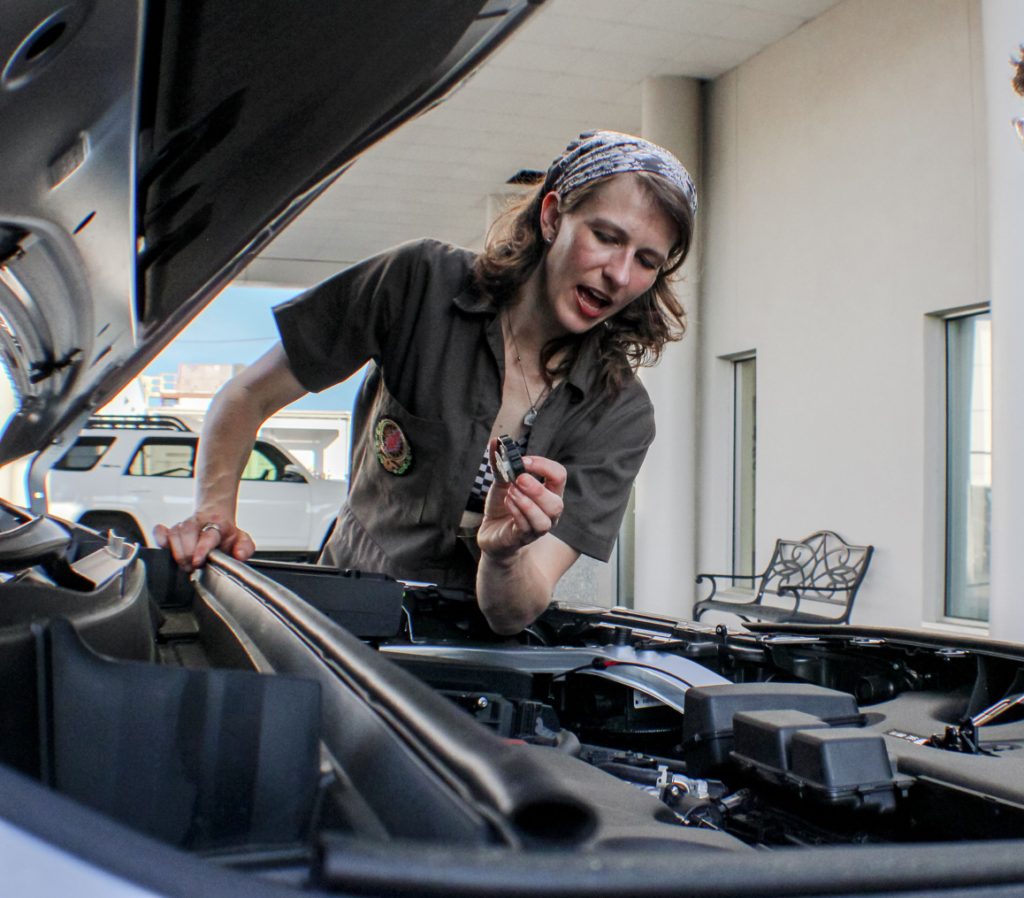
“You’re not just learning tasks, we’re building that foundational level of car care knowledge together,” she said.
Classes are intentionally kept small so Dietrich can answer everyone’s questions and allow participants to learn at a level that feels comfortable.
“There are no dumb questions and no competition, which is what I love about learning with all women,” she said. “We go as deep or stay as high level as you’re comfortable with, and they truly are a lot of fun.”
One of Dietrich’s proudest moments came from one of the first women enrolled in her online course. The woman had inherited her grandfather’s beloved Monte Carlo and wanted to learn how to properly care for it.
About halfway through the course, the car began making a noise. She took it to a shop and received a repair estimate for $2,800. At the time, she happened to be working through Dietrich’s module about repair bills and how to read them. Something about the quote didn’t feel right, so she emailed Dietrich and they went through it together.
The power steering pump was failing, which Dietrich said made sense on an ’80s Monte Carlo. But the shop was charging labor to remove the pump and then separate labor to remove and install lines that had to come off as part of the job anyway.
Dietrich gave the woman the words she needed to question the estimate. She went back to the shop and pushed back, and the final repair ended up closer to $800.
The woman had been afraid she might have to sell her grandfather’s car. Instead, when the shop owner discovered what had happened, they even found her a less expensive remanufactured pump.
“It’s one of my proudest moments and it’s exactly why I do this,” Dietrich said.
She receives similar messages from women who read her newsletter, follow her on social media or take her course and then recognize an attempted upsell or find the confidence to try something on their own car.
Some messages are particularly emotional. Women tell her their fathers were mechanics who always took care of their cars. Now their fathers are gone, and they regret never asking them to teach them. They tell Dietrich they are excited to be learning from her because they know their dads would be proud.
“It’s just so wonderful and inspiring,” she said.
Building Something Local
For Dietrich, the emails, comments and messages from women have been some of the most rewarding parts of Women’s Car Care 101. She loves hearing that something she taught gave another woman the confidence, language or knowledge to question something and push back.
Hosting in-person workshops has been particularly rewarding. “I love my live webinars because I can turn the cameras on and answer questions in real time, but in person is so much more tangible,” she said. “There’s a level of humanity to it that you just don’t get behind a computer or a phone screen.”
Dietrich says one of her biggest challenges is the one she is working through right now. She has been full time with Women’s Car Care 101 since May, and after initially building an online business, she is now working to establish herself locally.
“This summer has been about becoming a true local business too, really being part of the community here in Mooresville and Charlotte,” she said.
For anyone who feels intimidated walking into an auto repair shop, Dietrich’s advice is simple: get curious and ask more questions.
“The more curious you get about why you need something, or how necessary a recommendation really is, the more you learn about your car,” she said. “And that knowledge doesn’t expire, you carry it with you to every car you’ll ever own.”
Curiosity, she says, is at the heart of Women’s Car Care 101.
“You stay curious, you keep learning, and you keep growing.”
What’s Next
Dietrich’s next hands-on workshop is scheduled for September 26 and 27 at Ghostface Brewery in downtown Mooresville. She is also hosting monthly webinars, with this month’s topic, “Three Common Car Noises: Is It Serious or Safe to Drive?”
She is developing a first-time drivers version of her workshop and hopes to get involved with local schools and Girl Scout troops. Dietrich is also looking to partner with other local businesses and sponsors, and a printed version of The Complete Car Buying Guide for Women is on the way.
Dietrich says the best way to keep up with everything is through her newsletter, which goes out about once a week with a helpful car care tip, updates on what she is working on and announcements about upcoming webinars and workshops.
And when she isn’t teaching or working on cars, honestly, it’s mostly still cars. Dietrich spends some of her free time working on her ’86 K5 Blazer and an old Honda motorcycle. Outside of the garage, traveling and live music are her two great passions.
If readers remember only one thing about her story, Dietrich hopes it is this:
“You don’t have to be a mechanic to feel confident, capable, and in control of your car. You just need a foundation of car care knowledge and the confidence to back yourself up.”
Want to keep learning from Meg? Sign up for the Women’s Car Care and Confidence newsletter, where she shares helpful car care tips, updates and information about upcoming webinars and workshops.
Sign up for Meg’s newsletter here: https://www.womenscarcare101.com/newsletter-women-s-car-care