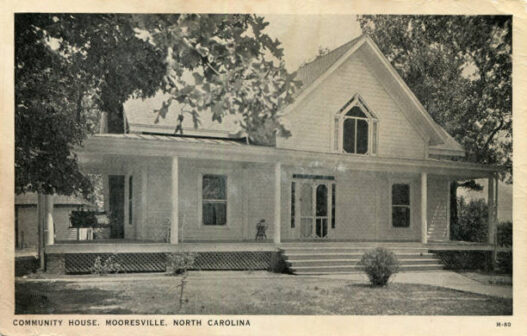
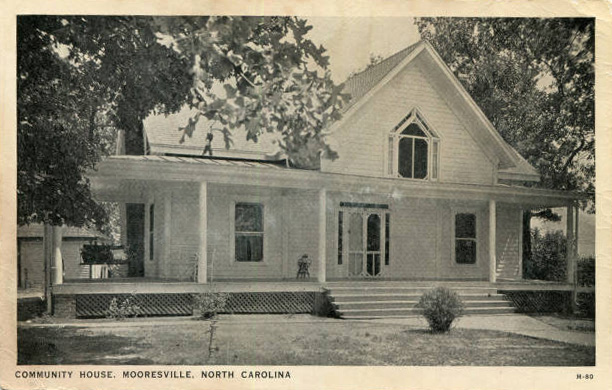
What started as a search by Mooresville Now for the “Community House” in early 1900s Mooresville quickly turned into something much bigger. That research led us to a collection of maps spanning more than a decade, revealing just how quickly our town grew and took shape.
Take a close look… you might recognize more than you think.
Long before Mooresville had traffic lights, shopping centers, or even Lake Norman, the town was already beginning to take shape and it was happening faster than most people would expect.
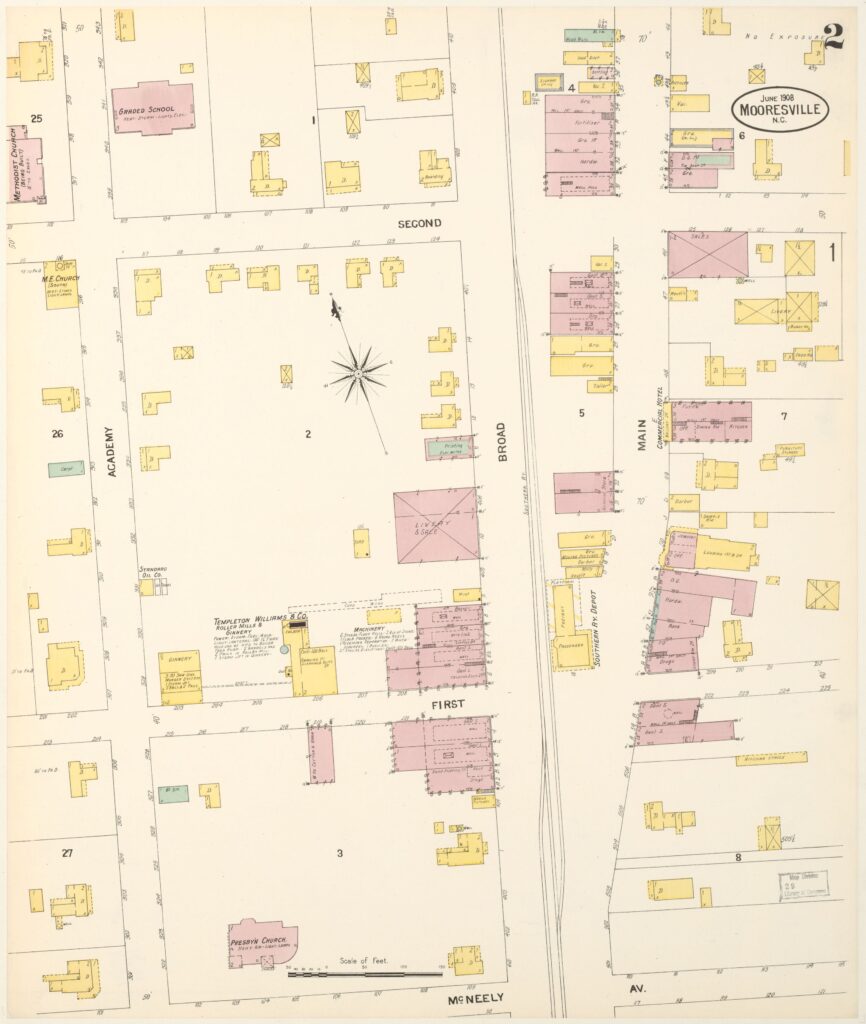
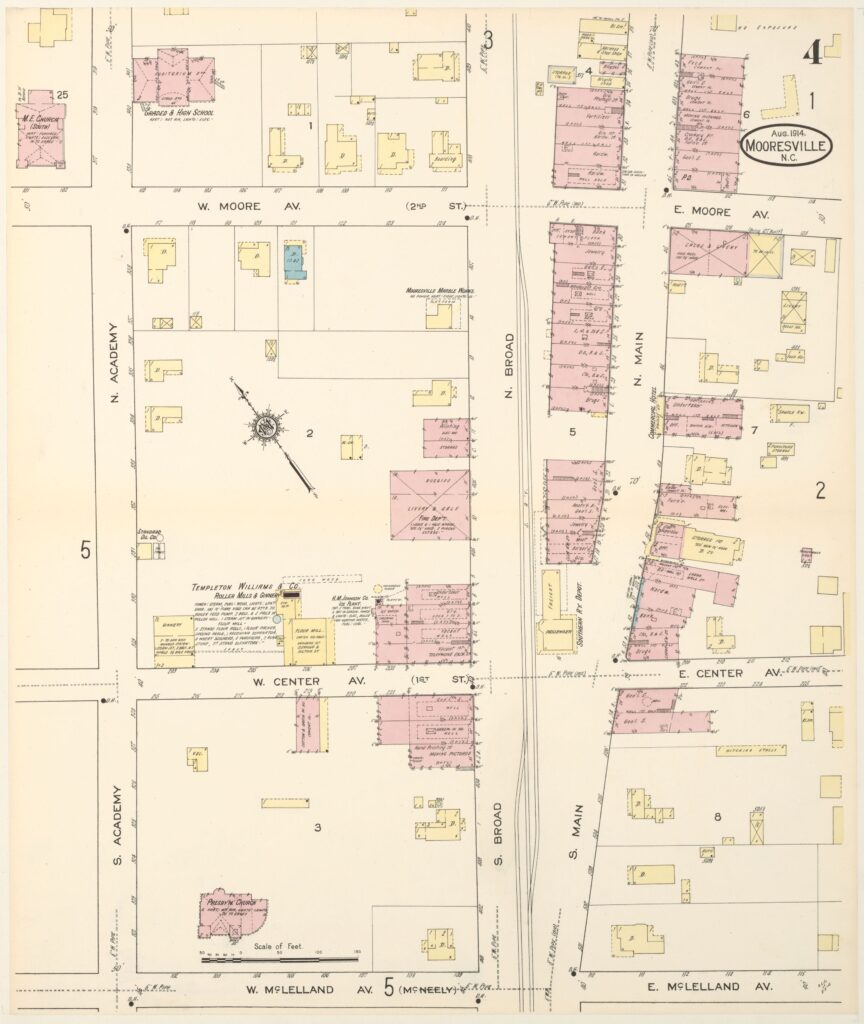
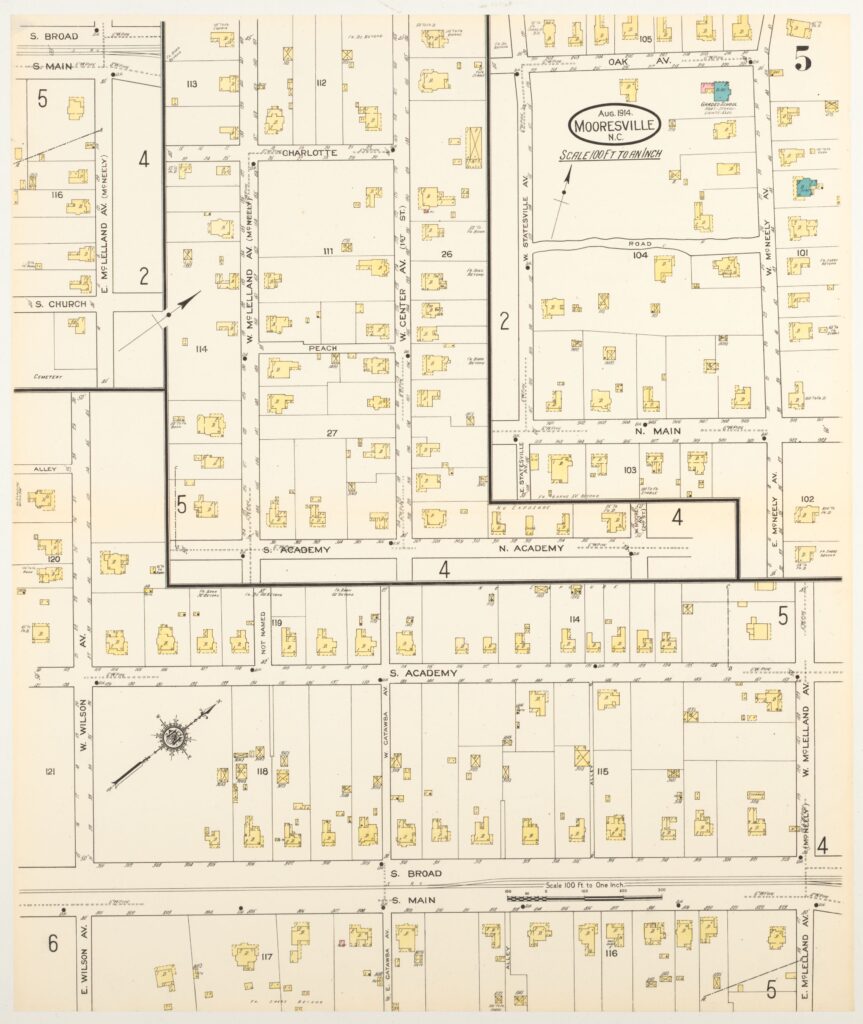
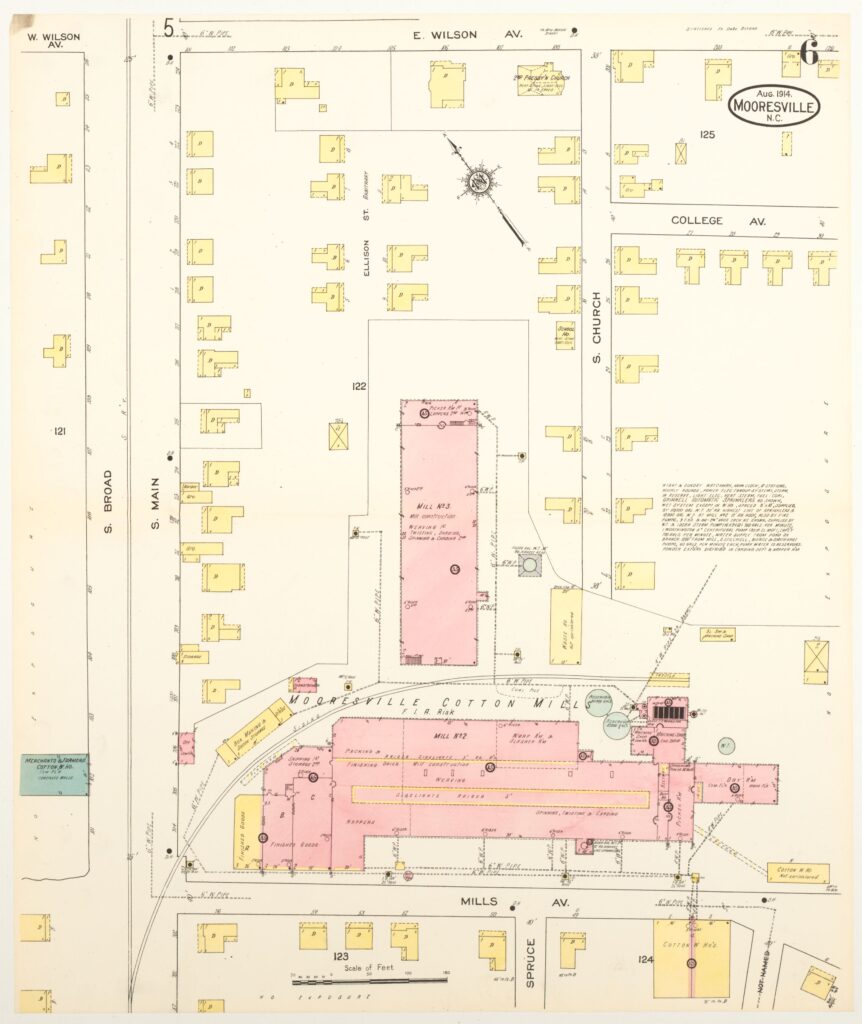
These rare maps, created by the Sanborn Map Company, give us a snapshot of Mooresville in 1902, 1908, and 1914. When you look at them side by side, something really stands out. You can actually watch the town grow.
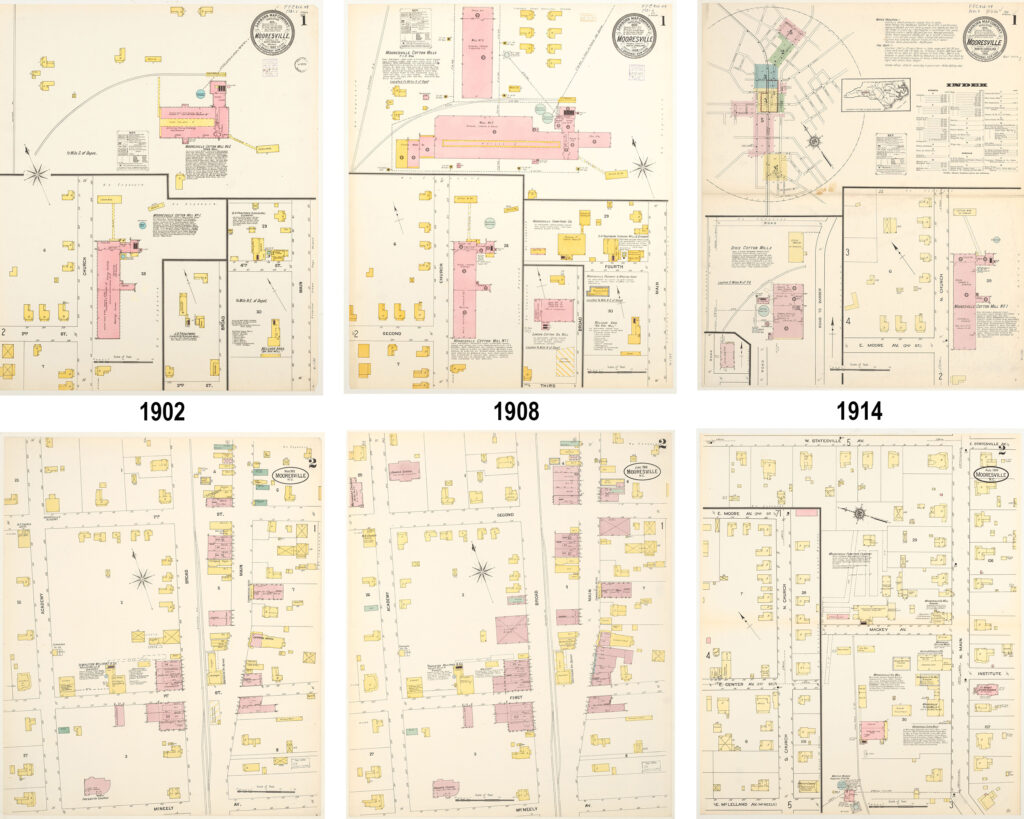
As you look at the maps, you’ll notice the different colors used throughout. The yellow buildings represent homes, many of them mill houses built for workers and their families, while the larger pink buildings show the mills and industrial spaces that powered the town’s growth.
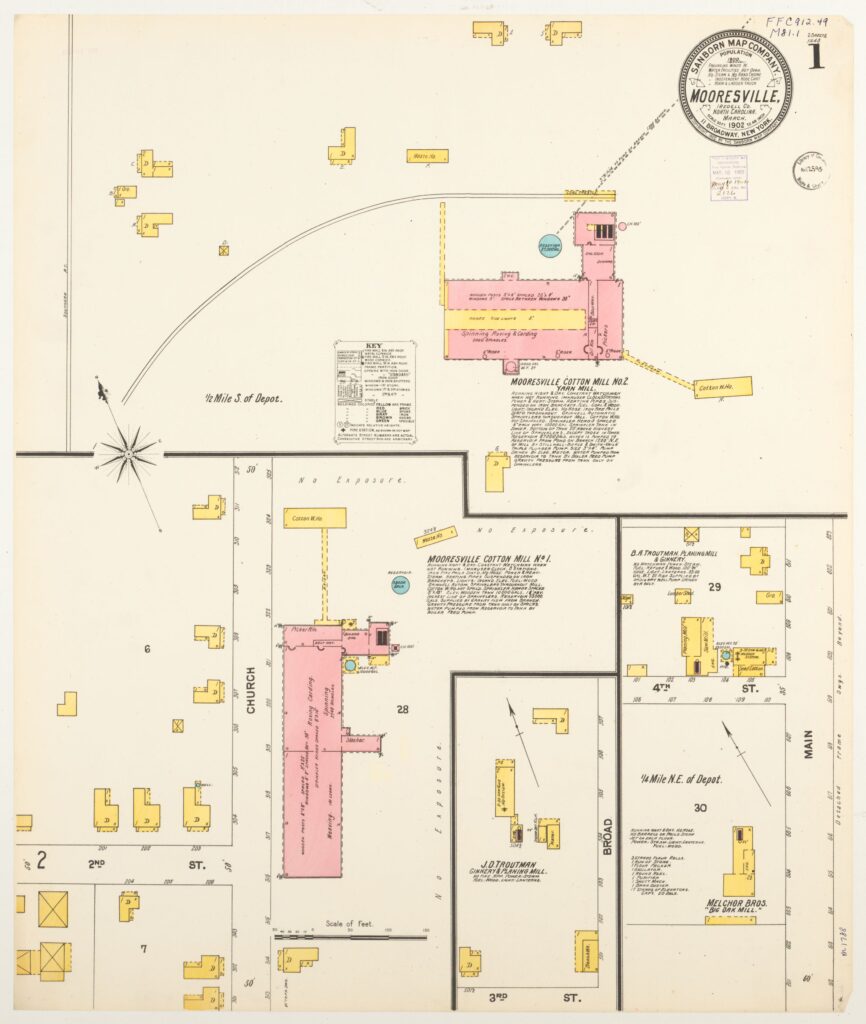
In 1902, Mooresville was still fairly spread out, but even then, you can already see the early foundations of industry forming. The Mooresville Cotton Mills appears on the map, along with smaller operations like the Mooresville Oil Mill and nearby ginneries. These were some of the earliest drivers of the local economy.
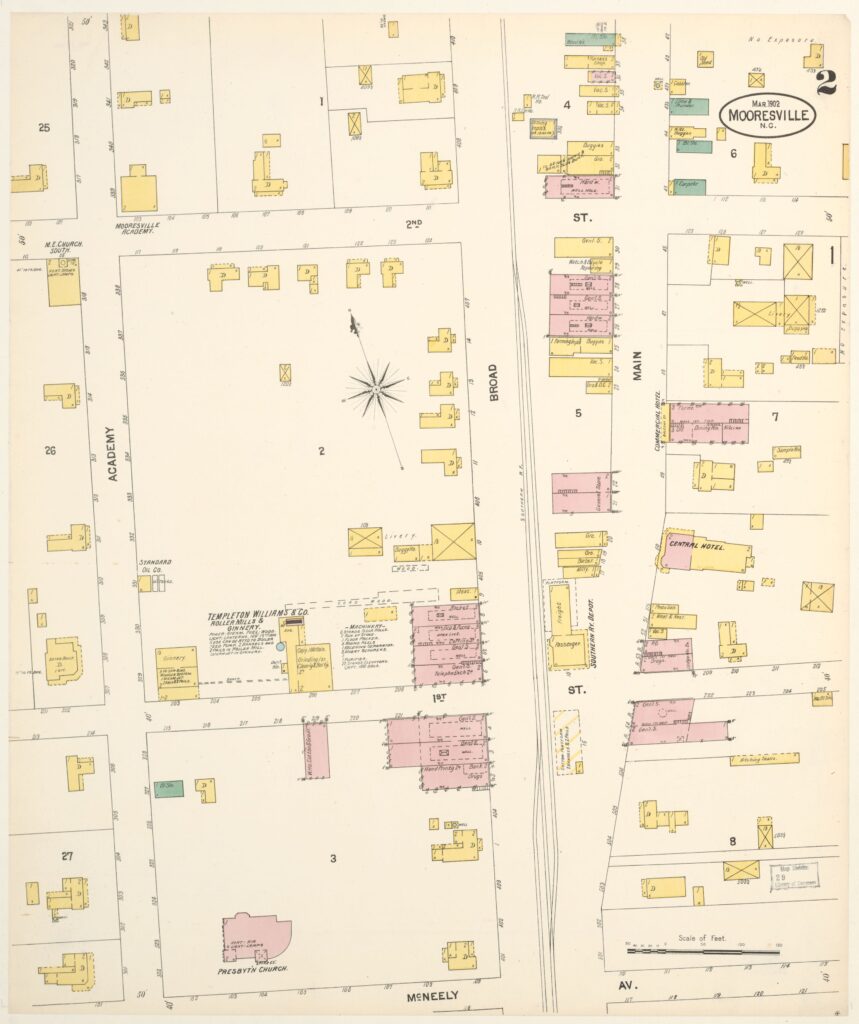
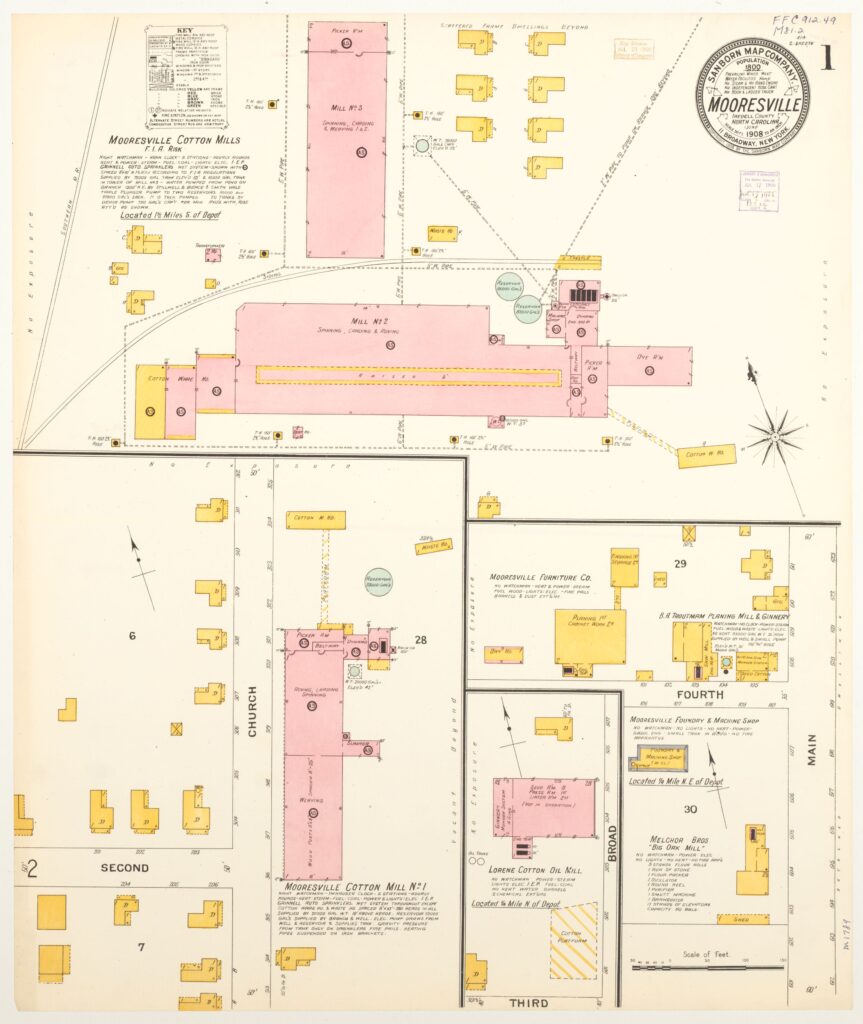
By 1908, things begin to change in a big way. The Mooresville Cotton Mills had expanded significantly, now showing multiple structures including Mill No. 1, Mill No. 2, and Mill No. 3, along with cotton houses, picker rooms, dye rooms, and machine areas. You can also spot nearby businesses like Templeton Williams & Co. Roller Mills and other industrial buildings starting to fill in around the area.
At the same time, the town itself is growing around that industry. Rows of mill houses begin to appear along Main Street, Broad Street, Church Street, and Academy Street. What was once more open land is now starting to feel like a true, connected community.
By 1914, the transformation is striking. Entire sections that were once open are now filled in with homes and businesses. You can see places like the Mooresville Furniture Company, Mooresville Foundry & Machine Shop, and Melchor Bros. “Big Oak” Mill showing up on the map, along with even more defined residential blocks.
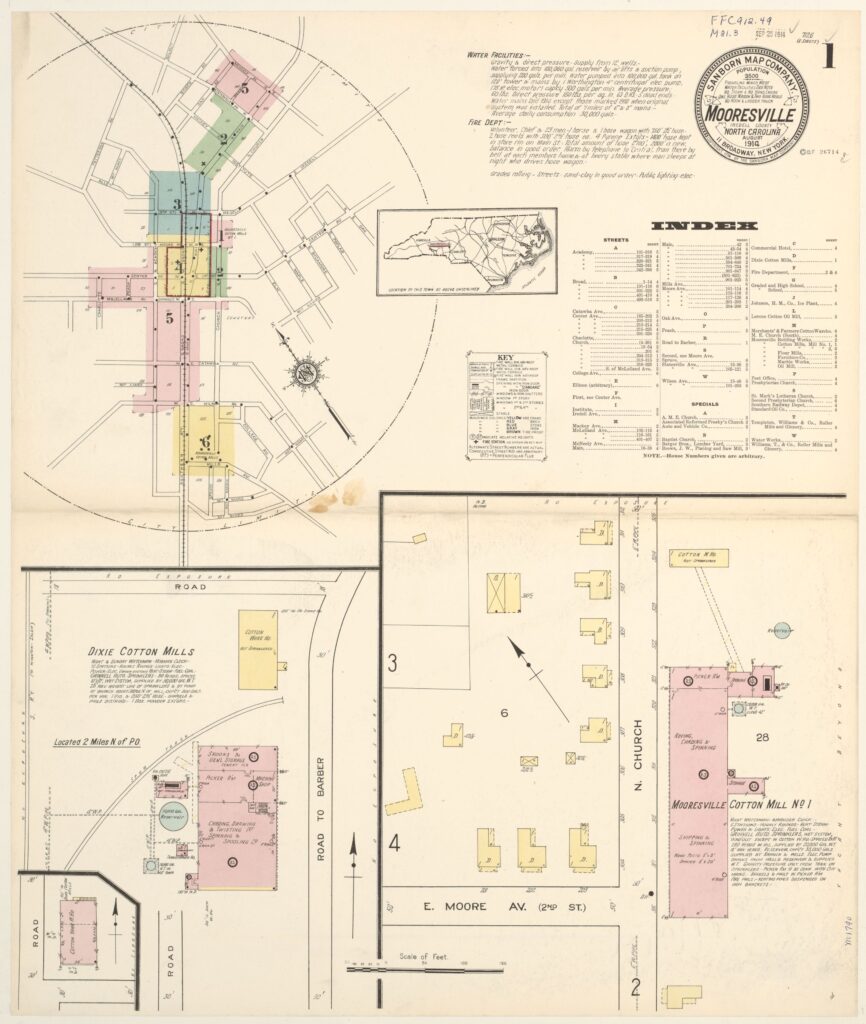
What’s especially interesting is that this growth wasn’t just industrial. Community spaces were built right alongside everything else. The maps show a Graded School, along with churches like the Methodist Episcopal Church and Presbyterian Church, woven directly into the neighborhoods. Everything people needed was within walking distance, work, home, education, worship, and gathering spaces.
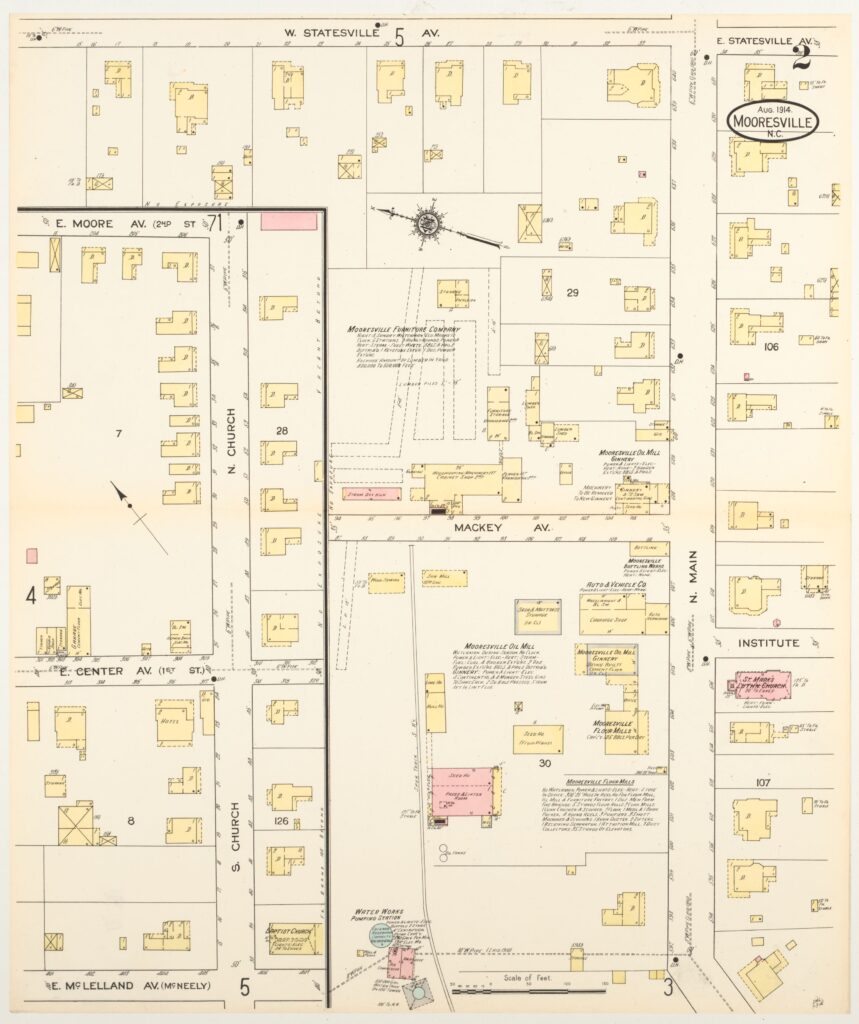
If you look closely at the earlier maps, you’ll also notice larger open areas, especially near Main and Broad Streets. By 1914, many of those spaces begin to fill in, but early on, they likely served as gathering spaces or even locations for early community buildings. These were the places where neighbors connected outside of work, adding to the sense of community that defined mill towns.
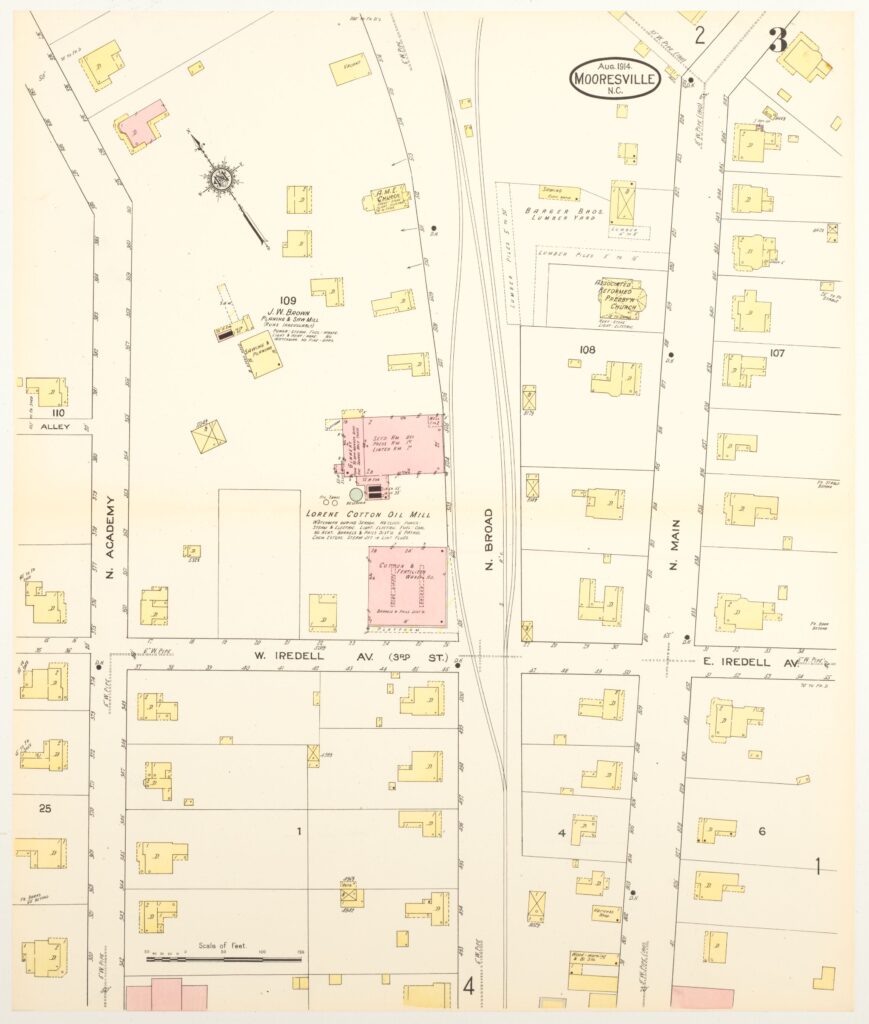
What’s really incredible is how much of this foundation still exists today. The buildings may have changed, some replaced, others updated, but the layout of the town remains. The roads, the neighborhoods, the way everything connects, it all traces back to this short but important period of growth between 1902 and 1914.
Next time you’re driving down Main Street or turning onto one of these side roads, take a second and think about this. In just over a decade, Mooresville transformed from a scattered town into a thriving, connected community.
And you’re still driving through that history today.
Images courtesy of historical Sanborn maps.